
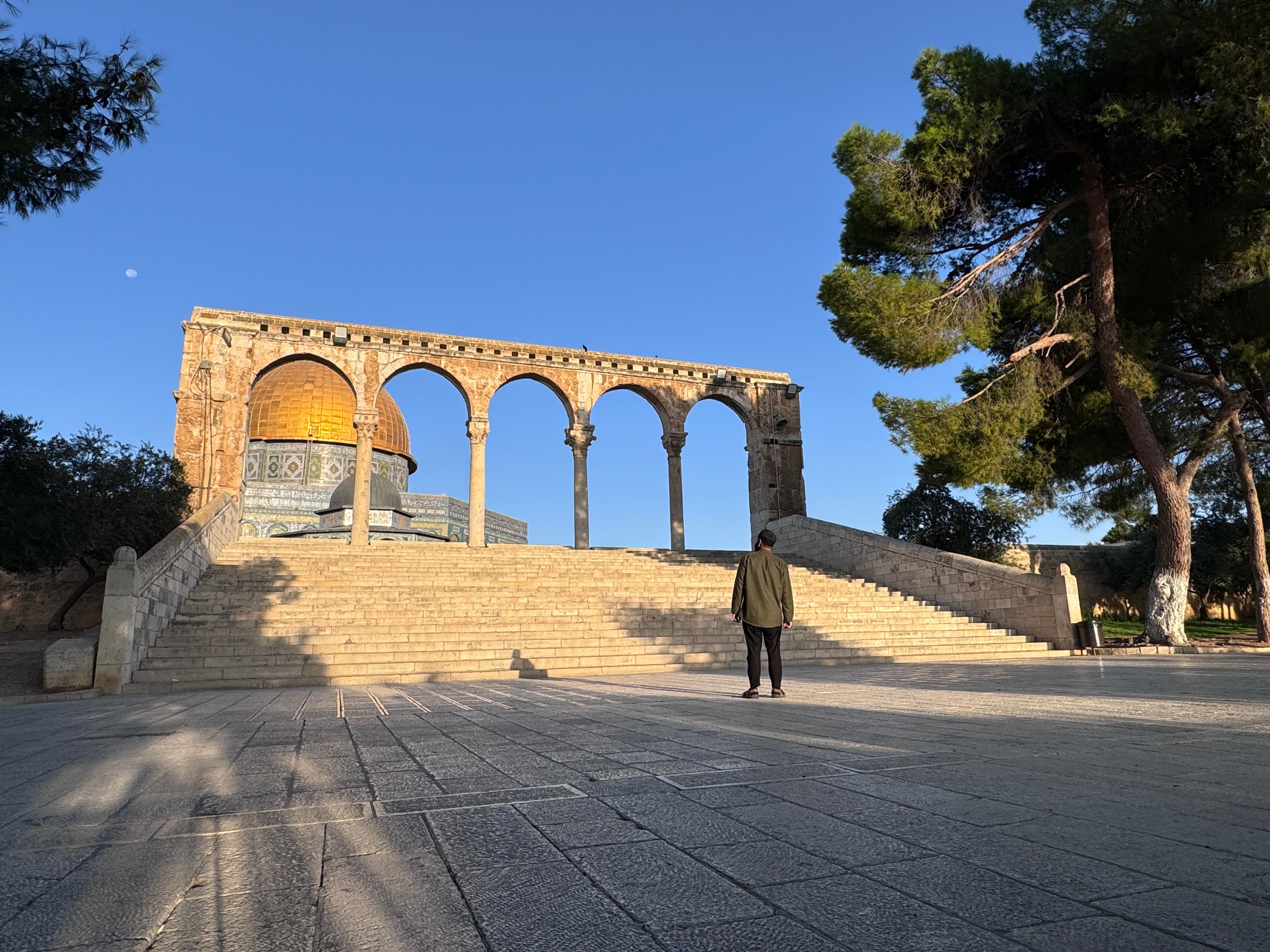
One of the most common questions people ask before visiting Masjid Al-Aqsa is very simple:
Is it safe?
The short answer is yes, it is safe to travel to Masjid Al-Aqsa when the journey is planned properly, the situation is being monitored, and travellers are guided with care.
However, it is also important to be honest. Travelling to Masjid Al-Aqsa is not the same as travelling to a normal holiday destination. This is Al-Quds. It is one of the most blessed places on earth, but it is also a place with a very sensitive political reality. Because of that, people naturally have questions. They want to know what to expect, whether it is open, whether people are still travelling, whether groups are still going, and whether it is something they can realistically do.
The purpose of this article is to answer those questions in a calm, balanced and practical way.
Is Masjid Al-Aqsa open to visitors?
Yes, Masjid Al-Aqsa remains open for worshippers and visitors, although access can sometimes be affected by the local situation, religious periods, political tension, security measures or restrictions that may be introduced at short notice.
This is why anyone travelling to Masjid Al-Aqsa should do so with preparation, flexibility and up to date information. The reality is that many Muslims continue to visit Masjid Al-Aqsa, pray there, spend time in Al-Quds, support local businesses and experience one of the most spiritually powerful journeys of their lives.
For many people, the worry before travelling is much bigger than the reality once they arrive. Once they are there, walking through the Old City, entering the blessed grounds of Masjid Al-Aqsa, hearing the adhan, praying inside Musalla Qibli, seeing the Dome of the Rock, and sitting in the shade of the trees, many people realise that this journey was not only possible, but deeply meaningful.
Is Jerusalem safe for Muslim travellers?
For most visitors travelling as part of an organised group, Jerusalem and the areas around Masjid Al-Aqsa feel manageable, calm and familiar once they settle in. The Old City is full of local residents, shopkeepers, worshippers, families, students, visitors and pilgrims from around the world.
You will see people going about their daily lives. Shops are open. Food is available. Hotels are operating. People are praying. Visitors are walking through the streets. Life continues.
That does not mean there are no risks at all. It means that the journey needs to be approached properly. You should avoid unnecessary political discussions in public, stay away from protests or large gatherings, follow local guidance, keep your documents safe, and remain aware of your surroundings.
This is similar to many sensitive destinations around the world. The key is not fear. The key is preparation.
Why do people think it is unsafe?
A lot of people only see Al-Quds through the news. They see headlines, conflict, tension and images that naturally create fear. The news often shows moments of crisis, but it does not always show the daily reality of people living, praying, shopping, studying and welcoming visitors.
This is one of the reasons why so many Muslims delay visiting Masjid Al-Aqsa. They assume it is impossible, closed or too dangerous. But when they speak to people who have actually been, they often hear a different perspective.
They hear that people are still travelling.
They hear that groups are still visiting.
They hear that Masjid Al-Aqsa is still open.
They hear that the experience is powerful, emotional, safe and unforgettable when done with the right preparation.
Of course, every traveller should check the current situation before travelling. But it is important not to allow fear alone to stop us from visiting one of the three blessed masajid.
Is it better to travel alone or with a group?
Some experienced travellers are comfortable arranging everything independently. They book their own flights, accommodation, transport and visits. That is possible for some people.
However, for many first time visitors, travelling with a guided group is much easier and more reassuring.
A guided Masjid Al-Aqsa journey gives you structure. You are not left trying to work everything out alone. You have support with the schedule, transport, visits, reminders, local context and practical questions. You also travel with other Muslims who have come for the same purpose.
This can make a big difference, especially for those who are nervous, elderly, travelling with family, or visiting Masjid Al-Aqsa for the first time.
A group also helps you understand what you are seeing. Masjid Al-Aqsa is not just a place to take photos. It is a place of Qur’an, hadith, Prophetic history, Islamic scholarship, sacrifice, memory and responsibility. When you travel with people who understand the importance of the place, the journey becomes more than sightseeing. It becomes learning, reflection and worship.
What should I expect at the airport?
Many people are nervous about immigration and airport questioning. This is understandable. Some travellers may be asked questions when arriving or departing. The questions can be about why you are travelling, where you are staying, who you are travelling with and what places you plan to visit.
The best advice is to remain calm, polite and honest.
Have your documents ready. Know your hotel name. Know your return date. Know your basic itinerary. Do not panic if questions are asked. For many travellers, this is simply part of the process.
If you are travelling with a group, your organiser should guide you on what to expect before departure. This helps people feel more prepared and less anxious.
What practical safety steps should travellers take?
The first safety step is to stay informed. Before travelling, check official travel advice, speak to your organiser if you are joining a tour, and make sure you understand the current situation.
The second step is to travel sensibly. Avoid protests, demonstrations and areas where tensions are rising. If your guide or local contact advises you not to go somewhere at a particular time, listen to them.
The third step is to keep your plans simple. Do not try to do too much in one day. The Old City involves walking, stairs, uneven paths and crowded areas, so comfortable shoes and good pacing are important.
The fourth step is to respect the place. Dress modestly, behave respectfully, avoid filming people without permission, and remember that Masjid Al-Aqsa is not just a tourist attraction. It is a living masjid, a place of worship and a place deeply loved by the people of Al-Quds.
The fifth step is to keep your essentials safe. Carry only what you need. Keep your passport secure. Have a copy of important documents. Make sure your phone is charged. Keep emergency numbers saved.
None of this should scare you. It is simply responsible travel.
Is it safe for women and families?
Yes, many women and families visit Masjid Al-Aqsa. Families with children, mothers, sisters, elderly relatives and couples all make the journey.
The key is preparation. Families should think carefully about walking distances, heat, rest times, meal times and the needs of children or elderly relatives. Women should also prepare clothing that is modest, comfortable and suitable for walking.
For those who are nervous, a group setting can be especially helpful because there is more support, structure and companionship.
Is it safe for elderly travellers?
Elderly travellers can visit Masjid Al-Aqsa, but they should be realistic about the physical side of the journey.
The Old City has slopes, steps, cobbled streets and uneven ground. There may be early mornings, late nights, walking between the hotel and Masjid Al-Aqsa, and visits to different parts of Jerusalem and surrounding areas.
This does not mean elderly people cannot go. It simply means they should prepare in advance. Walking more before the trip, wearing comfortable shoes, bringing necessary medication and allowing time to rest can make the journey much easier.
A good group itinerary should also include balance. The aim is not to exhaust people. The aim is to help them benefit from the journey.
So, is it safe to travel to Masjid Al-Aqsa?
Yes, it is safe to travel to Masjid Al-Aqsa when the trip is planned carefully, the latest advice is checked, local guidance is followed and travellers go with the right preparation.
It is not a journey to approach carelessly. But it is also not a journey that Muslims should automatically dismiss out of fear.
People are still visiting. People are still praying there. People are still returning with memories that stay with them for the rest of their lives.
The best approach is simple:
Prepare properly.
Check the latest advice.
Travel with people you trust.
Make plenty of dua.
Go with sincere intentions.
And when Allah opens the door for you to visit Masjid Al-Aqsa, take that opportunity seriously.
Join a guided Masjid Al-Aqsa journey
Some people are comfortable arranging everything independently. Others prefer to travel with a group, a guide, reminders, structured visits and support from start to finish.
Our Masjid Al-Aqsa tours are designed for people who want to visit with knowledge, care and companionship.
The journey usually includes flights, accommodation, local transport, guided visits, reminders, practical support and time inside Masjid Al-Aqsa itself. The aim is not just to visit, but to understand where you are, why it matters and how to make the most of this blessed journey.
If you are thinking about visiting Masjid Al-Aqsa and want to do it with guidance and support, you are welcome to join one of our upcoming group tours.
May Allah allow us to visit Masjid Al-Aqsa safely, accept our intentions, protect the people of Al-Quds, and make us from those who honour this blessed place with love, knowledge and action.
Share:
The Virtues of Travelling to Masjid Al-Aqsa
Terminology Matters